28 February 2014

Home and high – dry and home -drome-

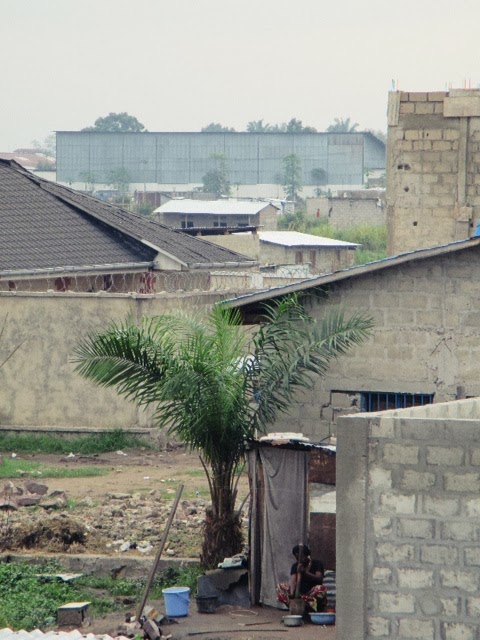
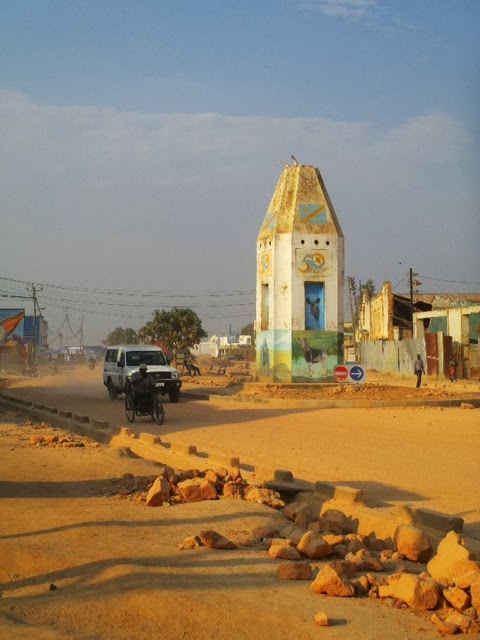
I know it’s mentioned it previously (multiple times. I’m very single-minded lately, but I suspect that you would be, too), but it’s the dry season here. And, in the era of climate change, this is serious business – even the locals are complaining. I’ve also kvetched ad nauseam about the dust (one of my colleagues recently called the massive plumes stirred by the wind ‘majestic’. I was terribly proud of myself for my restrain in not smacking her) but…it’s pervasive. Walking outside, the effect is immediate. I can feel the dust settle on my hair and coat my skin in a fine talc. My eyes begin to sting and my throat becomes parched. The grit gets in your teeth and textures your tongue. It is not remotely majestic. It is unforgiving. The dust doesn’t even whirl (again, respectfully disagreeing with my rose-tinted colleague here) – it billows in harsh, menacing waves. It dulls everything. This is a truly beautiful country, but the longer the dry season progresses, the more it’s bucolic loveliness is leached from the surroundings (I readily admit that this might be a question of perception – as the season marches staunchly on, I get more and more tetchy). The light in Bunia has become harsh and flat. It bleaches and drains and renders the world in sepia. Even the clouds are lifeless and two dimensional. The sunsets can occasionally be really striking, though. 
To my mind, and thereby illustrating how deeply frivolous and narcissistic I am, one of the most irritating consequences of the Great Bunia Dust Bowl is the curtaining of leisure activities. This is, hands-down, the worst my asthma has been in years. Practicing Pranayama, not to mention going running, has become a rather fraught endeavour. I’ve also been doing a lot of slack-lining lately (don’t ask. There’s a cute French man involved, and that’s about all you need to know). It’s surprisingly fun, and I’m (slowly. Ohhhh, so slowly) getting better, but I’m not sure if it’s a matter of actual improvement or simply and intense desire to not have to dismount from the line. Where once I would have had a mattress of verdant grass to cushion my falls, I am now met by the hard ground. Twigs and clumps of dead grass adhere to my feet and dust clings to my yoga pants (how unsightly! What will the cute French man think?!). It’s harder to walk the line with debris all over your toes.

The dust also has moments – generally transportation-related and independent of a generalised lowering of lung capacity – when it can be downright dangerous. Case in point (or two): a mototaxi passed me this morning with a toque pulled down to the level of his chin. I’m unconvinced that he could properly see where he was going, but I suppose it’s all a question of priorities. Similarly, last week, someone (who really should have known better) unthinkingly turned on the AC in our Land Cruiser, not wanting to open the windows to the dust. It was like a haboob in the car. Apparently some of this is Sahara sand, so it’s not an inapt comparison.

Bug prevalence is also worse, or at least so it seems to me. I’m not sure if it’s water related, but it seems that nearly every morning there is a new cockroach inverted on our kitchen floor. In their down-side-up panic, they try to fly, spinning, no whizzing around in circles like some grotesque wind-up toy. They can survive for days like that. I would rather have expected the mosquitos to lessen, but they’re magic. I have been interested to note that when you successfully slap a mosquito, the body squishes to one of your limbs while an outline of it is left imprinted into your slapping hand, almost distressing in its detail (my hand-eye coordination as really improved, buoyed by an intense desire to not get malaria again). What with all the infestations in the bath and bedroom, I feel like I check myself for creepy crawlies more often than a meth addict.

Maybe would be easier to look past the dust if there was any possibility of relief. But there isn’t. You see, what with the lack of rain, we have no water. Generally speaking, the house depends on rain run-off to fill several massive cisterns dotted around the property. We’re also hooked up to the city system, of course, but they ran out of water weeks before we did. All of Bunia is experiencing a shortage. Even the broad spot on the river that serves as the communal car wash has been shuttered for insufficient H2O. Our logistics team had to go out and forage a tankful from the river farther out and then truck it back in.

When it arrived it was…somewhat less that pristine. Really, it looked more like rooibos tea (if only it had smelled like it, too). It’s difficult to feel truly clean when you’re taking a bath in dirty water, but you do managed to feel refreshed, I guess, so that’s something. On the bright side, my hair has great body and texture right now and my skin is terribly well exfoliated. We’ve also had good fun joking that too much time in Congo turns you into a mud-bath taking hippo. Look out if I start becoming super aggressive and territorial.

The paucity of even dirty water has created something of a merry water war between the two houses on our conjoined compound (resource wars involving humanitarians seem like a wonder premise for a topically absurdist play, no?) that is aided and abetted by our rotating guard staff. We are periodically able to convince one guard to siphon water from the main house so that we might have a shower, only to have them steal it back for drinking filtration while you’re mid-shampoo rinse. Despite the obviousness of these shenangins, no one talks about it. It’s Water Fight Club. Occasionally, I furtively wash up at the main house (a pre-yoga foot scrub behind enemy lines!) and enjoy the most absurd sort of gloating accomplishment for sneaking one past my teammates turned advisories.

What I really don’t like to think about with regard to the quality of water we’re working with right now is that this is the same water in which we wash cloathes (assuming that we even can. We’ve actually put a temporary moratorium on laundry, which is becoming increasingly worrisome as my stock of unmentionables dwindles down to nothing. I’m going on R&R soon people! A girl needs skivvies!) and – worse, to my mind – dishes (it’s fine for drinking, incidentally. Our water filtration systems are aces, which one would expect from an NGO that specialises in WASH). Someone chided me for not washing off a piece of fruit before cutting it for a salad, reminding me that this is Congo! Sure, I thought, which means that there are no pesticides on this fruit, and it’s not like the dirty water will make it clean from the dust of transport… Someone else made the rather tragic mistake of looking in our water tanks. The spit of liquid that remained was apparently covered in an oil-slick film. All in all, I think it’s an amazing accomplishment that we’re not half-dead all the time. Here’s to the resiliency of the human body!

If I look past my personal inconveniences, the dry season is not all bad. Cholera epidemics, for example, rarely occur during the dry season and it’s a great time to vaccinate kids (measles and meningitis are worse, though. Malaria stays the course. It’s tremendously consistent, as far as murderous epidemic diseases go – I blame those damn resilient mosquitoes). Travel is also much, much easier. Partly because of that, the cost of many goods, including food and medicine, noticeably drops.

Finally, it’s a great time of year for major construction projects. On this bright note, and in no small part due to the recent visits of both the President and (muzungu!) Governor, work on the main road has progressed steadily (steadily, but not quickly. This is the central boulevard through all of Bunia, and it has been closed for going on three weeks now. Getting into work has been…complicated, greatly increasing the traffic volume on the narrow market road we take and adding burning tar to the dusty bouquet of Bunia scents). Once they completed tarmacking the first stretch of road, we were treated to the rather endearing site of people strolling along the finished product, dressed smartly, a great many of them be-hatted. I found it terribly Victorian of them.


I’ll end with a final happy piece of news – based on the trees in our yard, mango and avocado season are just around the corner, and there are dark clouds massing on the horizon. Things are really looking up!

17 February 2014

You kiss, others tell*

My Congolese colleagues all properly call it St. Valentine’s Day and were tickled when I wore a (unintentionally) thematically appropriate red shirt. As a valentine’s gift, let me begin by sharing the rather critical information that sex apparently makes you smarter. I thought you would want to know that. For what it’s worth, my personal take-away from that article is that I now need to follow intercourse with some light philosophy reading and meditation. My cognitive and hippocampal functioning will improve like whoa, though all future partners are now guaranteed to think that I’m insane. The speed with which they flee might well determine if the experiment is a success or not.

With that out of the way, I’m going to return to my recent ruminations on what it means to live the expat life here in Bunia. Most in the NGO world (and not only here, but in most humanitarian contexts) are forced to live in community. There are sound logistical reasons for this. It allows for a safer team, it’s cheaper, and finding your own place is, frankly, a bitch. Some people do it, but it’s super complicated and more difficult to maintain, landlords and real estate agents around here being somewhat less than responsive (and the latter non-existent). Organisationally speaking, team living is the only way to go. Even personally, there are some real benefits: it’s not as scary, not as lonely, and I don’t have to do my own laundry or go grocery shopping unless I’m really motivated.

That said, I haven’t lived with this many people in a single residence since college, and it’s…a challenge. I like my space. And you never really have that here. One of my colleagues is forever disparaging people (particularly the Dutch, for reasons I don’t fully understand) for never leaving their rooms. But, look, if I just want to listen to some quiet music and read a book without interruption, it is impossible to do in the living room. If you sit in the open, no matter how bugger-off your body language reads, people will take it as an indication that you’re willing to have a 30 minute-long discussion about their trials in acquiring a green card or learning to wind surf or experiences nursing in Switzerland or the societal breakdowns that make Americans gun-toting fatties and the French godless Bacchanalians. And it’s not that I don’t care about these things or the person I’m speaking to. It’s just that, sometimes, I would rather not chat. And if I want that time without blowing people off like an insufferable ice queen, I have to take it in my room.

Sorry for the rant. The upshot is that we all live and work in very close proximity with each other. This set up is only successful when approached with patience, sensitivity, respect of privacy, and maturity. Which is to say, it’s not generally successful at all. I kid, I kid. Seriously, though, no matter what happens, we’re one another’s soap opera. For a bunch of what are ostensibly adults, we can get awfully petty. I remember a co-worker once ranting about how nasty someone was because she (the supposedly nasty one) didn’t clear her (the ranter’s) plate from the table with the other dishes. I mean, that bitch! Another time, someone opined that the cat had gone missing because one of our colleagues had bribed the guards to kill it (it was fine. It turned up after a week, none the worse for ware and desirous of fish). I think the Country Director bears the brunt of the interpersonal strife – in addition to being our boss, she had the dubious honour of also being our RA, chastising people when they stay out past curfew or drink beers they didn’t buy. Heavy is the head that wears the crown.

She’s also the lucky party who gets to manage inter-office romance. Like the couple that announced their engagement after very unsubtly dating for a grand total of three months. No one wants to say out loud what a bad idea this is, so we all just manage that we’re happy for them and we really hope it works out and leave it at that with a damningly pregnant pause. And while that was fairly straight forward, if perhaps ill-advised, we’re now avidly watching what is shaping up to be a proper love triangle. The non-emotionally entangled members of the team (the women, at least. I don’t know where the other fellas stand) watch obsessively for clues in body language, rooting for the ladies involved to variously step up their efforts or, for the love of God, tone it down, the local staff is watching, for Pete’s sake! It doesn’t help that the women in question had something of a tempestuous professional relationship to begin with. Throw a dubiously eligible man (he has, on multiple occasions, expressed the desire to become a Protestant monk, so they both might be barking up a celibate tree) into the mix, and the sparks are flying in the most entertainingly understated, passive-aggressive manner.

I sometimes feel bad about gossiping about my co-workers with other co-workers, but…there’s no one else to talk to about it. It’s hard to gossip about people here with friends from home and vice versa, given the lack of overlap betwixt the two. And I’m fairly certain people talk about me, too (that might be hubris. I’m not sure my ego could fully take it if they didn’t think about me at all). Finally, it can be a bit difficult to ignore gossip that is very nearly thrust under your nose. It behoves those living in community (especially such a thin-walled one) that nothing is ever as secret as you imagine it to be. At least, as far as field relationships are concerned. Home stuff, meanwhile, is as private as your inside voice.

Generally, I think we would all be a lot kinder to one another if we weren’t around each other so much. Some people to attempt to engender that space by living in a kind of self-imposed isolation – hardly interfacing with the team, never joining in any social activities. I found one colleague’s confession that she never joins us for Zumba or yoga or volleyball because she was so tired of making friends only to have them leave heart-breaking (and also took it as an indication that she should possibly get the hell out of dodge). Another is a bit removed, in that she doesn’t live with us, but with her Congolese husband. Even they remain subject to scrutiny, though. The woman with the husband, for instance, has been in Congo for some 20 years and often gives the younger staff (unsolicited) fashion advice, usually comprised of the warning that our skirts are too short (knee-length) or our jeans too tight (boy-friend cut) and someone might mistake us for whores (so that’s why people keep yelling Cherie at me on the street. It has nothing to do with my skin colour or obvious expat-ness. Glad we got that cleared up). We readily ignore her advice, no matter how well-meant, given that, by her own admission, her husband won’t let her wear tank tops (it’s because she’s a pastor’s wife. But, still, you lost me at ‘my husband won’t allow…). 

At any rate, one does always feel subject to some observation, even by teams not your own. It makes the prospect of dating somewhat daunting (I had a friend from another NGO who returned to France in December recently contact to ask if it’s wasn’t true that two other people – neither of which works for her NGO or mine – had actually gotten together and were now pregnant. The gossip mill here does not respect continents or time zones, let alone barbed wire-tipped walls). Often, what coupling does happen is less traditional dating than lusty interactions ranging from smiling too much when talking to someone or dancing together too many times or even furtive, alcohol-aided snogs in dark corners at house parties.

Some folk do legitimately try and date, though it is a fraught prospect. Forget the long-term questions (is this viable? Should I invest in a relationship here? Is this person also single/emotionally available, or are they lying?). Even a non-illict fling would need some kind of date night, and that’s not easy. When two of my colleagues finally came out as being a couple, they could never find anywhere to go on a romantic night out. At MONUSCO House, there is little social convention to prevent crashing. It’s the romantic equivalent of being unable to read a book on the couch unmolested. A determined pair could, of course, also try to eat out somewhere else at one of the many and varied dining establishments of Bunia. I can count on one hand the number of times we’ve tried anywhere else. In part, that might have to do with the competition. Take, for example, the months-old Garden Restaurant (actual name). When it first opened, the expat community flocked there; we are voracious in our appetite for diversity. As we walked in that first night, there were sounds of admiration for the lighting and landscaping, about how airy it was, what beautiful gardens (at least the directness of the name is earned, unlike the rather more perplexing Camping). As we crossed the broad lawn to our appointed table, everyone agreed to how lovely it all was. One of my teammates, however, kept appraising the high concrete walls topped in barbed wire and finally allowed that it looked like the exercise yard at the poshist prison in town. I suppose it all depends on how you chose to perceive things. For example, that night, I could have opted to focus on how charming the wait staff was, how delicious and inexpensive the food (my dish was 4 USD!), how much I enjoyed the soundtrack (Congolese artists, where MONUSCO usually plays American and Indian). Or I could dwelled on how less than half the menu was actually on offer (and it took the server nearly an hour to determine what the kitchen had available), once an order was finally placed, the food took two hours and 15 minutes to arrive, was not what I ordered, and ultimately made me vomit for the next six hours (so, of the two words in its name, it at least lived up to one. Batting .500!). The fact that I’ve since been back twice points to the fact that I am: (a) foolish; (b) an eternal optimist; or (c) resigned to the fact that I have few other options, none of which are really any better. Take your pick.

I can’t help but imagine if someone – especially two points on our prickly little love triangle – did try to go on a date. I am presented with the gloriously absurd vision of the rest of the team tailing them, peaking around corners and hiding behind non-existent newspapers and magazine racks and large potted ferns like some kind of sorry, love-deranged spies, our titters barely concealed behind our hands. It would be a shambles. We don’t even have the trench coats convention dictates.


*I had fully intended to post this on Friday afternoon (in a fuller, and one had hoped, funnier, iteration), only to be laid low by malaria. Despite my best efforts, I was unable to come up with anything pithy to say about the malaria, aside from sharing the wisdom that, if you are going to get sick, perhaps try to plan it for the weekend you don’t run out of water and gas. Any illness, tropical or otherwise, is best endured with hot showers and copious amounts of tea.

10 February 2014

Let the Good Times Roll (Part 3ish)

After an initial flurry of activity when I first came back, work has been quiet. Too quiet for my liking, to tell you the truth. My family often asks me what I’m up to, and I feel guilty that I never really have a good answer. But the truth is that life in the field is very often boring and monotonous. We are still waiting for word from our donors (and it already February! This is a bit scandalous), so in the meantime I’m just spinning my wheels and designing impossible yoga sequences. Sure, the pregnant lady and dudes who can’t touch their toes and those professing various and sundry knee and back problems can to Bird of Paradise! It’ll be fun (I kid. I would never. Well, not right away. We’re building up to it.)!

Happily for both my sanity and my students’ bodies, I’ve found something new to interest me: cheese. Now, rather than searching for asanas to promote shoulder health and tighten the core (I would go with Utkatasana, Ustrasana, or, if you're really tough, Tittibhasana), I am spending far more time researching farmer’s cheese that I would be willing to admit to anyone in the office. This includes the self-same colleague who put me on the cheese war-path to begin with. This individual, who was raised in as a MK (missionary kid. It’s like the secular version of a military brat) in Uganda and has spent no small amount of time in DRC, brought with him an ice cream maker. The man understanding the cravings of field life and is prepared. Unfortunately, he also manages not the most experienced. He bought from milk from a local farmer. It came to our door at 7 am on a Sunday, unpasteurised, unseparated, still warm – straight from the utter to your compound! Prior to purchase, my colleague had solicited a number of suggestions about how to treat the milk so that we didn’t all end up tossing our cookies clear across town. The responses spanned the gamut from don’t boil at all to boil for 30 minutes, separate the cream first, don’t separate the cream, etc., etc. The first suggestion struck us as unsafe, while following the latter seemed like it would result in no milk at the end of that experiment. We ultimate went for a 5 minute boil, unseparated. To our surprise, the milk promptly balled up and turned into cheese. I was not, at first, brave enough to try it. Lucky, both my colleague and the cat have more adventurous stomachs. After waiting a few hours to see what would befall them (nothing, it turned out), I gave it a go. It wasn’t altogether unpleasant - nice texture, crumbly without dryness, but it wanted for salt.

Heady with unexpected success, we decided our next step would be to make our own mozzarella. Basically, managed to stumble a few steps despite ourselves and determined we were ready for the cheese Olympics. As anyone might have been able to tell us, mozzarella is a bit beyond our reach. You need citric acid and rennet (which can – huzzah! – be vegetarian). However, I have determined that we can attempt ricotta and what purports to be a very nice farmer’s cheese. There is a whole wide, pungent world beyond Goma cheese!

For what it’s worth, we also did manage to get the milk to boil without clumping and eventually tried our hand at ice cream. It was…well, only our first time, so unmitigated disaster is probably too harsh an assessment. That said, it never managed to set beyond the soup stage. It was also shockingly artificial-tasting (the vanilla here is suspect, despite our proximity to Madagascar) and took on a sickly green hue, on account of the old m&ms someone had scrounged from somewhere to share. Well, like I said, it was a first effort only. My gastric future looks bright.

Over the long winter break, the brave and foolish few who remained actually became quite adept at entertaining ourselves. We played a range of board games printed in more languages than we could keep up with – Clue in French (Cludo) was not too much of a stretch (though not a man or woman on my team had ever seen the film. I was astounded and vowed to download it as soon as the internet would support such action. So…never) and (on the more random end of the scale) Settlers of Catan in Portuguese and the Amazing Labyrinth in Russian (the randomness of the games in my house gives an indication of how varied our staff has been over the years. Luckily, the interwebs have been strong enough to support a search for the English translations of the rule). I was also introduced to ‘African rules’ pool, in which a scratch on the eight ball, does not result in a loss. I was suspicious that they just made up pity rules for my partner because I’m so awful.

I also took advantage of my housemate/boss’ absence to paint the bathroom full of fish. It’s not my best work, for sure, but it’s also not all bad, considering I’m using oil-based house paint cut with nail polish remover and applying it with my one eye shadow brush. Desperate times and all that.

More recently, the American contingent of my NGO decided that it was our patriotic imperative to watch the Super Bowl. I am not yet prepared to relive the experience it in any great depth. That shit was painful. Sufficed to say that we spent the better part of two weeks figuring out how to watch the game with no luck. Finally, Sunday evening at roughly 8pm (there’s a time difference, but even so, there wasn’t a second to loose), we were able to marry a television with a receiver. We sweet talked to the head of security at the standard bar into letting us crash between the magic hours of 1am-5am – he, too, was an American and understood. Our Dutch country director took a bit more convincing, but we finally got her on board (by promising not to tell anyone. Sssshhhhhhh!). This was how I found myself at one am in the deserted expat bar, animatedly explaining to a trio of gamely interested Italians about the down system and extra points and then, suddenly, we switched to safteys….then then punts….and then interceptions…and then I got really quiet for a long time. The other Americans picked up my explanatory slack – they were less invested than I – on why there were so many pauses and how a lineman nicknamed Pot Roast could possibly count as a professional athlete. At least the Mexican guy not only knew what was going on, but shared my despondency. Who knew that the Doncos were so popular south of the border? Anyway, the less said of that debacle, the better. At least I won’t be pining for football in the coming months, now that I’ve had my snootful.

The most common diversion, by far, though, are house parties. They usually occur on Saturday nights (Friday night, you see, is ‘happy hour’ at MONUSCO House, so no one would come to a house party, and all the other nights we’re pretty much just hermits). Even these have a sort of anticipatory sameness. MSF will have the best booze and the most restrictive guest list (no UN). Enesco (a UN contractor) has the best food and often the weirdest vibe (they seem to invite a lot of…prostitutes?). Solidarité is super fun, but the dance floor is bitty. Cesvi…hasn’t hosted a party since they got their piglet, and you can’t really blame them. The missionaries and other Christian orgs never host anything resembling a party and don’t mingle with the secular NGOs.

It’s almost like there is an approved soundtrack for when more than five expats get together. I hear the same songs at every house party we go to, over and over again. In one night, I heard Gangnam style no less than three times. I have to admit that I was impressed at how well the Egyptian peacekeepers knew a dance created by a South Korean pop start and made viral in the US. I suppose I shouldn’t have been. Of course, as whoever happens to be the self-appointed DJ gets drunker, the music selection tends to get more esoteric. Bollywood standards, Lebanese hits, Australian 80s classics, French or Italian house music…we’re usually at the mercy of the sobriety of the host. Most the us are game to dance to anything though, so we usually soldier on until 1 or 2, when our legs are about to give out and we have to make it back or be late for curfew. Ours is at 1. We…mostly respect that.

Really, implying that we’re limited to house parties or MONUSCO is unfair; there are myriad places we go to dance. After the MONUSCO happy hour closes shop at midnight, we almost always wander over to the townie disco (Champagne Club – the name is misleading) and join in a terrifically popular line dance that is strongly reminiscent of the Electric Slide. Champagne can be hit or miss – the music can be utterly undancable (on good nights, it features Congolese music (for which they are justifiably famous and sounds like a bachata by way of Jamaica), hip hop, and, very weirdly and consistently, Summer Lovin’.), there can be prostitutes everywhere (MONUSCO is not supposed to go to the clubs, for obvious reasons, though that never seems to stop them), and the guys, national and otherwise, can get really aggressive. With the Congolese, the only thing that seems to work is telling them you have a boyfriend. Simply saying no with escalating levels of intensity NEVER works.

My favourite place to dance, though (aside from my room, where I prefer to rock out in my socks and headphones after a particularly long day) is in the empty pool of Hotel Royal. The Hotel is on the outskirts of town, so the stars are almost painfully bright. In the pool itself, people mill and smoke and generally exude ineffable European coolness in the shallows, while dancing is confined to the deep end. The less adventurous tend to take up perches on the side of the pool, just dipping their toes in the maelstrom of movement and music. The more we drink, the more precarious is it to make the transition from one side of the pool to the other. We probably should just pour out the beer and made a slip’n’slide.

31 January 2014

And ain't it grand (Part 2)

And now here I am, back in Bunia again. With cars that don’t work (I ran into the last logs expat leaving the country at the airport and he warned me that one of the cars doesn’t have working lights, the breaks are giving out on a second, and the third, well, he just said not to drive the third), internet that barely functions, assorted insect infestations (ants in the bathroom, cockroaches in the kitchen, something that looks vaguely maggoty building a tunnel up the wall in my room, and a massive spider web in the avocado tree. Perhaps not a web. It is both too gargantuan and too messy to be a web. So more like a spider hive in the avocado tree. While we haven’t yet seen one of the hive residents, I always pause before walking under it and then scamper quickly past, awaiting the day many-legged death comes for me from above), a malfunctioning sink that periodically turns into a geyser for no apparent reason, and every other wonderful thing about this place.

Honestly, the cars have probably presented the most adventures since I’ve come back, if by adventures I mean mostly likely thing to kill or maim me in the near future. I almost got stuck in a ditch because of having to reverse down an abruptly impassable road, at night, with no back-up lights. Another one of our fleet, which apparently has some sort of ignition problem would not, for the life of me, turn over, leaving me inching down a hill toward a shop-shack and desperately trying to get it to start before I (hopefully gently) tipped over the shop and its occupants. Myself and some colleagues found ourselves driving back through town the car with no headlights after a perfectly lovely sundowner (it was the only car we could get to start, and by the time we remembered which one it was, it was too late!). I spend the ride hanging out the window with a 50€ flashlight in my hand to try and provide some illumination/warning for oncoming pedestrians and praying that we didn’t get stopped by the cops – it’s a much more fraught proposition here than in the US – or, you know, hit someone. Then there was the time when a piece of the engine quite literally fell out while I was driving. The car that is generally agreed to be the best (it’s the one with the ignition problem. You learn not to park on a hill) and is really lovely to drive has recently began determinedly smelling of Cheetos and feet. I feel like one of the hapless competitors in the Great Race who wasn’t dressed in black or white or named Maggie DuBois.

Not all the travel-related news from Bunia is negative, though. Following a Presidential visit that I missed by a day (and, stars, would that have been fun to discuss!) there has been a flurry of construction activities, especially along the main road. Seeing as how the Province itself has no money, there is a well-informed rumour floating about that the work is being financed by a Lebanese gold company. Oh, man, did the assumptions get ugly fast with that one (offering mining concessions as payment for infrastructure work has a long and storied tradition in the Congo that has almost always ended badly for the country). Political ickiness aside, this development means that there are suddenly, and without warning, massive piles of dirt and ripped-up trenches where once there were bumpy, if passable roads (one such pile is how I nearly ended up in a ditch at 11pm). Once construction is completed (and they’ve only managed to do the main road, despite prepping/rendering impassable at least a tenth of the roads in Bunia), it makes the dust worse and traffic move a lot faster (those two things are very much related, and both a bit of a bugger when you’re predominately a pedestrian). They are also building a rather lovely sidewalk, with somewhat mixed results. It’s unmortared, for instance, and seems prone to falling apart. Moreover, people are finding it to be continent parking, which…sort of defeats the purpose. More recently, one of my go-to side roads was blacklisted because the UN discovered a bunch of mines left over from the war. It’s good to be home!

I think I’ve mentioned before that the dry season is upon us with a miserable vengeance. But even as we start every morning by brushing a thick coating of dust off of our computers and chairs and even each other, depending on the level of flexibility in your personal bubble, many of my colleagues have expressed worry about the US held, as it and Canada are, in the tyrannical clutches of Jack Frost and his frozen-hellish Polar Vortex. Almost every day, someone sweetly asks after both my family and the poor (updated this morning – they asked about Atlanta and their TWO INCHES OF SNOW. Pull it together, Atlanta). They are deeply, deeply concerned about how the impoverished in the West are handling the winter. One inquired as to where they picked up their firewood when the weather ‘was not conducive’ or how it was for them, walking on ice. It’s interesting how we assume that markers of wealth and poverty are universal. Here, even the very poor have houses (for the most part. The urban poor – like street children – are another matter), but often lack shoes, cloathing, access to water, etc. This last can be especially problematic during the dry season, when even contaminated sources of water can evaporate.

On a positive note, as I write this, we’re enjoying our first proper rain since my return. It’s cool and the sound of the drops on the tin roof makes a soothing soundtrack to my work, undercut with the percussive hits of the thunder. I am managing to ignore the fact that the water pouring off the roof is, and has been, for like 15 minutes, the colour of weak tea. The ground is so parched that there is no mud.

Another plus to the rain is that it has temporarily broken up the second day of student protests taking place catty-corner to our office. The students are demonstrating against the fact that their teachers are on strike. For their part, the teachers are on strike because the bank through which they are paid has a two dollar fee for every transfer. Now, two dollars is a lot when your pay check is 50$, but I still found it an interesting series of events to lead to shouted accusations of thievery for days on end.

It’s a minor irritant, though, when compared to our neighbours at the living compound. Have I mentioned them before? Our Lady of Night Owls and Early Birds? I kid, of course – I have no idea what demonic presence birthed from the loins of Belezbub and an insomniac these people pray to that demands that they hold their loudest services between 11pm and 6am. I don’t even think my objections would be so strident were it not for two things: (1) the irregularity of the services; and (2) the tone-deafness of the pastors. Without either one of the elements, I might well be able to consign the supplications to the background, as one might when living over a bar or near to an airport. When, however, you are awoken from a dead sleep after days of peaceful dreams by an Amen that is chanted as a sort of guttural scream and goes on for hours, well, it’s just hard to snuggle back down into your pillows. If you manage to, your ensuing dreams might well make you wish that you hadn’t. Thank all that’s holy that I’m off the Larium.

24 January 2014

Back in Bunia (Part 1)

Honestly, I had fully intended to post this a while ago – like more than a month ago, when I actually got back – but…I’m really lazy. And then the post kept getting longer and longer as I kept writing but neglecting to edit. As is quite obvious from the typos and other assorted errors that plague my posts, editing is my least favourite part of writing. At any rate, my scattered, haphazard thoughts from the past month-plus have now been collected and edited and will be posted in digestible chunks.

I finally find myself once again in Bunia. I think a large part of the reason I go home so little while living abroad is the flights. They are horrifying. This last time around, I spent more than a day (30+ hours, if you’re counting on planes each way, not including the time in airports or on runways. Not to mention the delays and aborted flights and multiple de-icings and emergency trains and whatnot. So it was something of a relief to finally be able to unpack my (increasingly heavy) bag and know I’ll be sleeping in the same bed for a while. Somehow, magically, the bed in question actually seems comfortable. I think the plane time made me forget how luscious my bed at home is. It didn’t do anything for the pillows, though. Nothing can save the pillows.

In my first full day back in Africa (I was in Uganda, not Congo, at least not yet), I managed to buy pirated DVDs of varying quality (Thor was unwatchable, but Strike Back was excellent, so my man candy quotient worked out okay), rode a boda boda (not recommended. And I did try to avoid it – I do not have a death wish – but it was damn near impossible to get directions from anyone in Kampala. Where is X? Oh, it is too far. You must take a boda boda. Okay, fine, but saying I didn’t? No, no. It is too too far. Almost never is it actually that far. Do they just think that Americans are incapable of walking? Potentially), and grabbed a communal taxi back to Entebbe (perhaps not overtly recommended, but also not discouraged, if only for the price. It cost about a dollar, where a private cab for the same distance costs 30 bucks). The boda boda ride was…exciting. We wove so tightly in and out of traffic that my knees brushed cars and, somewhat more disturbingly, tires. I was amazed that my pants didn’t get ripped (same goes for my knee caps, I suppose). For not even lasting 10 minutes, it was a decidedly unnerving experience.

The lot where you catch the ‘buses’ (they’re really 15 passenger vans that carry about 20, despite the massive warning on the side that they are only approved for 14 and usually someone – an adult – is sitting on someone else’s – possibly a stranger – lap) is fascinating. It’s a massive dirt lot with the blue-stripped vehicles clustered so tightly together that it’s a wonder they can ever escape (at least a third of my journey was getting out of the lot). Dozens, if not hundreds of people were meandering through the buses with varying degrees of urgency, searching for their destination. Music spilled out of stalls and the open windows of idling busses. Goats and dogs were wandering amok, on and off leash, vendors were frying up what amounts to a sort of Ugandan doughnut or roasting peanuts, and others were hawking all manner of things from papers to bottles of water to rubber duckies (which were squeaked in my face with such ferocity that I nearly missed my bus). All of this added up to a right boisterous chaos that smells of diesel and dust and people and cooking oil. Which is perhaps not as unpleasant as one would assume.

Wooden sign posts tower above the fray, noting where the ‘stage’ is heading and listing general prices. As they will stop just about anywhere you ask, the prices are mostly helpful estimates. I was enchanted that they called themselves stages. It gave the whole endeavor an aura of old timey glamour that was totally unearned. It felt like the market scenes in Persephone or something out of the more terrestrial episodes of Farscape.

On my return to Entebbe, we were passed by the Prime Ministerial motorcade. At least, that’s what my driver told me it was. As an adopted DC-er, it was adorable – a mere three cars including the limo. And one of those three was a pickup. It hardly impeded the flow of traffic at all. One could never use this as an excuse for tardiness to a meeting or dinner date, where as in DC, ‘POTUS was on the move’ is just about as legitimate as ‘the metro broke down’. The only risk with that, of course, is that you blame him, only to find out he’s in Uruguay or something.

09 January 2014

Rockin' around the mango tree*

Happy New Year and belated Holidays! I trust that they were full of good will and cheer and the proper amount of snow and spiced wine (I started writing this before North America froze over). Given that I have – through my own fault, my mother would be quick to remind me – I found myself once again overseas during the holiday season, I thought I could write a helpful guide based on my experiences. Without further ado, here it is:

So you’re not going to be able to make it home for the holidays and are bemoaning how a white Christmas or lavish New Year’s Eve is only in your dreams. Never fear! Embrace this as a chance to escape all of the crass commercialism everyone is always decrying and get back to the true meaning of Christmas. And what better place to do that than a dusty African warzone?

As a quick aside, let me assure you that the dust is not to be taken lightly. We’re in the midst of the dry season, and the clouds of dust are so thick as to practically be opaque. In the early evenings, it’s less that the sun sets than that it is smothered by a wave of red-hued darkness. All of this rusty dust floating around makes me suspicious that Bunia is, in fact, Mars (I’m mostly just making this link because the photo is amazing. Also, it has transpired that it is Canada that is Mars). At the very least, it would be a decent stand-in for it. Take note, Hollywood. For my part, this just means taking an extra hit on the inhaler and looking at the bright side – I’m trying to conceptualise it as red snow and Bunia as a beachy winter wonderland. Having to use the headlights during the day to see through the clouds is a bit like seeing a tastefully decorated house through a blizzard. Yes. Lets’s go with that.

At any rate, as the weather outside is frightful, let’s turn our attention indoors. A fire would be categorically undelightful in this heat, but a general lack of power means that candle light is! Commence your decorating efforts by rounding up all of your extraneous old wine and beer and Amarula bottles (we don’t drink that much, really, but you could never tell by the décor) and stuff them with candles, regardless of fit. Tinfoil makes for a great bottleneck stuffer and does really nifty things when the candle eventually burns down. Just be sure when placing your fiery bottles to maintain safe distance from the paper snowflake Christmas tree (after all, what is Christmas without even a cursory call-back to pagan winter rites?), construction paper ornaments, scrap cloth garlands, and any drunken revellers who might be traipsing through (more likely a hazard at any given New Year’s Party, but still something to take into consideration). Believe you me – once your colleagues and friends (assuming they haven’t all fled the country to spend the holidays with their family like a sane person) feast their eyes on your homemade Christmas flair, they’ll be moved to commend you on your creativity. Never you mind if they somewhat undercut that by noting that only very young children make such things in their country. Is it not the same in the US?

Be sure not to neglect your office in favour of your house – after all, you’ll going to be one of only a handful of staff left, national and expat alike. You might at least enjoy it! For example, prior to his departure for the season, one of my colleagues somehow scrounged up a proper, if somewhat bedraggled, fake Christmas Tree and placed it in the piyote. Unfortunately, his festive gesture is somewhat undercut by the sensation that the brassy plastic bouquets that normally adorn the piyote are not reacting favourably to this Charlie Brown interloper. With their garish pastel colours and hand-sized blooms, they feel vaguely threatening – less like they’re complimenting the tree, and more like they’re strangling it as retribution for encroaching on their territory. I could have sworn it was a fuller fake tree before we put it in the piyote.

Moving on, nothing says Christmas like Christmas cookies. The act of baking traditional sweets has something of a magic quality. It not only puts both the baker and the consumer in the spirit (so much spicy sweet deliciousness!), but manages to suffuse you with the warmth of family traditions observed, transports you in time and space to the very best memories of Christmases past. Put another way, you can cook to cope with the stress and then have something scrumdiddlyumptious with which to eat your feelings! Truly, a win most epic. Pro tip – it’s even more fulfilling if you have somehow managed to pilfer you mother’s original copies of your family recipes completely by accident. Besides, it’s not like she needs them, right? She’s been making these cookies for so many years you can reasonably expect that the recipes are seared into the back of her eyelids.

One caveat to holiday baking in your particular warzone – approach the endeavour with a certain degree of flexibility. In this, allow Mary and Joseph to be your spirit guides – what, no room at the in? No worries – that barn looks reasonably sanitary for a new born (I told you this guide was about reconnecting with the true meaning of Christmas).

Let us take, as our first example, the case of Sugar. Unless you are some kind of, Aruvedic, anti-sugar, gluten-free-vegan-low-glycemic index heathen who hates joy and probably puppies (or a diabetic, in which case, three cheers for putting your health first!), your holiday baking requires heroic amounts of sugar in an exciting array of non-standard iterations. Karo syrup, say, or the powdered variety. But you’re living in a dusty backwater where they don’t even have real butter or non-powdered milk (and yet there are goats everywhere. Explain that one to me) and for all intents and purposes the only thing in your pantry is sugar in the raw (in many ways, my larder is super healthy. Processing be damned). ‘Tis the season for some creativity.

While you can’t make corn syrup (maybe some of you could. I am not that crafty), you can fairly easily substitute a simple syrup or honey for the Karo. Powdered sugar is also super easy to make at home, provided you have a blender or a food processor or even a coffee grinder. If you have none of these items, you can always turn to the old standby of a mortar and pestle. Even better if you have jumbo-sized one where you hug the mortar between your thighs like a cello and pound that sugar into a fine dust in ambitious quantities. Note – cleaning the mortar and pestle before and after the process is critical, lest you end up with cassava-flavoured (though pleasantly green- tinted) powdered sugar and weirdly sweet greens. If you don’t manage to clean the M&P sufficiently, cross your fingers and hope that the Christmas spirit will lead people and ants alike to pretend not to notice. Also, don’t be too fussy about a slight grainy-ness to your dishes. If any one does happen to comment on the unconventional texture of your icing because they were raised by blunt Dutch wolves, you can blame the sugar and not the dust. Trust me – it’s better this way.

Likewise, some of your recipes might call for eggs to be beaten to various levels of stiffness. The equipment you have on hand will once again determine you success in this undertaking. If you have beaters, great! Go to town. If not, you might have to use a whisk. Assuming you have one (note – you could always make a whisk out of sturdy and twigs. Make sure to clean them well and then soak them in something acidic and natural. Lemon juice is a good option.), be prepared for a whisking marathon. Beating those buggers to stiff peaks could take nearly an hour (assuming you stick with it. My estimation of an hour has all the authority of the owl in the tootsie pop commercials who claims it takes three licks to get to the centre.) For that reason, I suggest not attempting to mortar sugar and hand-beat eggs on the same day. It’s not worth it! Unless, of course, your Christmas gift to yourself is Michelle Obama arms. In that case, hats off to you and your beautiful buffness.

If, for whatever reason, your brand new (okay, so that might be a bit of a stretch. Perhaps gently used and recently installed would be better?) oven gives up the ghost (or possibly was never properly hooked up to your gas line in the first place, despite repeated requests to the house manager to get it fixed before Christmas as you might have some baking to do on the horizon…), pan frying your cookies is…not an acceptable alternative. What will emerge is certainly edible and not altogether unobjectionable – something like a sweet flatbread – but it is decidedly not a cookie. In case, you know, you were wondering about this sort of thing. I do it all for you. You can work around this oven issue by simply rolling the cookies out at home with the nearest bottle of alcohol (Captain Morgan’s gives some interesting underlying patterns that really add something to the cookies come decoration time), covering them in both plastic wrap and a damp towel (the dust will not be stopped!), and taking them to bake at the neighbour’s. I suggest further leaving some as compensation for the use of their facilities and fuel. Besides, it’s not like you need them; you have all that flatbread, remember?

If the final step of your cookie preparation, like mine, is icing, don’t lament you lack of colour options! In addition to the soothing minty green of the cassava base, look around for inspiration. A splash of wine makes for a nice rose of mango juice a cheering shade of yellow. Just roll with the flavour punches as you carefully paint bowties on your gingerbread men or trees strewn with garland that looks suspiciously like the border on a rum bottle.

No Christmas post would be complete without some description of the associated services, as, despite the yellow-journalistic yammering of the War on Christmas fear mongers, this is a decisively religious holiday (though I am fully aware that it does not belong exclusively to the devout among us. I even find it charming that this can be a time for everyone, well, many people, to come together with the biological or chosen families and enjoy one another’s company or hate their guts, as the occasion demands). So be prepared to engage in marathons of praying (which I had tying as prying and, well, there was that, too) and singing (here I typed that as sinning, which might have been much more interesting) with your colleagues, as well as comparing Christmas notes across cultures.

Prior to departing for your holiday in the field, be sure that your iPod or computer or what have you is well-stocked with a diverse catalogue of Christmas music. You never know when you’ll be called upon to save the office staff from Didie in finance who only had one song, a Swahili version of Silent Night, that he plays on repeat for days. Be prepared, though, for some of your more eclectic or decidedly American songs to be received with a bit of a chill. ‘So this also is a Christmas song?’ your German colleague might ask, tone heavy with suspicion. The songs that put such a dubious note in her voice will most likely be selections from Tran Siberian Orchestra and Grandma Got Run Over By A Reindeer. I know, I know – you can well understand the doubt about some of TSO’s work (though who knew that The Nutcracker is not a thing in Germany or seemingly anywhere in Western Europe) but GGROBAR? That is a CLASSIC. But take heart – it is likely this very song that will lead to your Dutch boss requesting to copy your Christmas music.

The cookies are baked, the candles lit, and your playlist has run its course several times over. What’s the next step to keep the festivities going? Watch a Chrismas movie, of course! Be sure to make your selection carefully, however, and plan in advance: given your woefully limited bandwidth, odds are very high that you will only be able to download one, and even that will take several days. Try to hide your shock when you international team is only familiar with the most recent of Christmas films, including Elf, The Holiday, and Love Actually. Instead, offer cheerful synopses of some classic alternatives (insufficient merriment in this endeavour will get It’s a Wonderful Life and A Christmas Carol declared ‘too heavy’ to watch on Christmas). Might I be so bold to suggest Miracle on 34th Street? Everyone will be terribly charmed by the cherubic Natalie Wood, though you might suspect that the story is a bit lost on people whose versions of Santa Claus arrive on the 5th or 6th of December on a white horse, accompanied by scores of persons in black face (from coming down chimneys, obviously. But if you ever want to fall down a racially uncomfortable Christmas hole on Wikipedia, go ahead and Google Black Pete).

As a final kernel of wisdom for your bush Christmas, I urge you not to rely on the input of one person only when searching for Mass times. Like as not, s/he will give you partial information with a totally deceptive air of authority, resulting in you finding yourself at a cathedral outside of town at 7pm for a service that started at 6:30 and is in Swahili, not French. Asking someone at this service will likewise prove futile – why would they know when another service is, as they’re already at one – and send you to a second cathedral, with the service still in Swahili (though with excellent music) and a caution that it is going to last until midnight. If you are will to continue church-hopping (it’s a little like tapas hopping, if you time the Communion services just right) with a French friend, be prepared for him to demand a French service, all while making snide comments about how it doesn’t matter to you, as you wouldn’t understand either one (just because you cannot understand his incomprehensible Brittony accent, don’t let your French skills be crushed). If you are lucky, you will most likely end up at the small church you normally attend just as the service is beginning. While you won’t be able to sit with your friend, and the incense will be so thick that you’re worried you’ll either be smoked out or stoned, the music will still be good and it won’t last for 3.5 hours (let’s hear it for European priests!).

For New Year’s, you’ll just rightly be inspired to pick up some celebratory champagne, but somehow the only bottles you can get are 100USD or more, even at the ramshackle alimentacion across the street. Unless you are really into New Years or independently wealthy (which, you’re working in the humanitarian sector for the purposes of this post, so…hahahahahaha), I suggest you stock up on the standard box wine and instead track down some other decadence (real butter is an excellent choice. You’ll find that it is only available at Janvier’s stall, and then only Mondays. It is sold out by noon and costs nearly five dollars for two sticks. But so rare a treat that it’s worth it!), bake some more cookies and make ‘spinach’ samosas (for which you will probably have to use suspiciously sweet cassava leaves in place of spinach and make the dough by hand, which is what my colleague explained all good Bunia women do), and go to party at a French NGO. Select your NGO strategically – perhaps select the one just across the street from the blow-out party of Bunia (a Masque! With a 7 USD cover charge! That’s how you know it’s posh) just to be sure you have a back-up option.

The the party you ultimately attend will not be substantively different than any other expat bash - some finger food , lots of drinks (no champers, though someone was sharing tequila by the capful. It was the dude who owns the bar. Go figure), and lots and lots of dancing. It’s likely that the only concessions to New Year’s Eve will the candles (fun but misguided, especially given how much everyone was imbibing – I did warn you about the drunken revelers early on) and the countdown, in French of course.

Make sure to clean your face beforehand and apply a tastefully understated perfume in preparation for the kiss-athon that accompanies midnight. Not that way, you sauce-pots. On the cheek, three times (right left right), just as when greeting. Bonne anne! Kiss, kiss, kiss. Happy year! Kiss, kiss, kiss. It will take ages. Try not to stay out too late, as yours is one of the only NGOs with a curfew and you have Mass in the morning (for which you Mass buddy will abandon you, prompting an interesting discussion about Holy Days of Obligation. Apparently they don’t have them in France? I find that…hard to believe. He promised to confirm with his mother.)

So to you I offer my cyber kisses and best wishes for a very happy 2014. May it be all that you deserve.

*Alternative titles considered for this pose include:

Miracle on Avenue de Libération, Grandma Got Run Over by a Moto, Baby, It’s Bunia Outside, and Away in a Piyote. While reading, I strongly encourage you to hum along with your favourite carol (it’s still technically the Christmas season, so I feel like I’m in the clear). May I suggest that holiday classic, Honking Horns (only slightly adapted from the original version of Jingle Bells). You know how it goes – Dashing through the dust, in a battered Land Rover, over the bumps we go, coughing all the way. 

08 November 2013

A Bunia Girl in the Big City

I think it’s possible that I need a vacation. I know, I know, seems like I just took one. But suddenly, proposal season is upon us and I’ve been working till the wee hours of the night (thus the long posting silence). Moreover, I just really miss being home. I miss being able to choose who to get drinks with on a Friday night and bars that serve something other than Drostdy Hof and Nile and being able to walk after nightfall and grocery shopping and watching football and my dog and…well, basically I’m just a bit tetchy lately and I really need to vanish for a while. Three weeks in the States should just about take care of that. Sadly, before that can come to pass, I have a whole host of proposals and concept notes (five, at last count) to get out and a few more field visits to undertake. Starting, of course, with a trip to Kinshasa (one could hardly call it a field visit), where I am at the moment (was, rather, when I started writing this). 

Either because Bunia is such a rinky-dink little town or because the air travel infrastructure of Congo is so poor (or some likely combination thereof), one cannot really fly anywhere direct from Bunia. Anywhere but Goma or Entebbe, that is. Not only is there not a straight flight to Kinshasa from Bunia, but you can pretty much write off ever making a connection on the same day you arrive – the flight times vary too much. So what should be a 4-5 day trip is actually taking 11 with nearly as much time spent in transit in Goma as in Kinshasa. 

Our Goma digs were not quite as luxurious as last time. Rather, they were outfitted with a wildly different standard of what constitutes luxury. Where the Lac Kivu Lodge, which was run by and clearly catered to expats, was all understated elegance and stately gardens, the Rusina is decorated in ivory and blush pink and canary yellow. Top that off with all the crown molding, and it’s like a My Little Pony house come to life. It was also undergoing some construction during our stay, which does interesting things to the wiring. We lost water and internet a few times, and the in-room kept ringing though there was never anyone on the other end.

When you check in to any given hotel in Congo, you are obliged to register with nationality, passport number, duration of stay, reason for visit, etc. This country is obsessed with superficially tracking people’s movements (superficial because you can’t convince me that anyone ever goes through all of the massive log books that are kept by the DGM or hotels and ever cross-checks anything). Edison, the Rusina’s clerk, was delighted to be registering someone from the States. He observed that I was ‘America - like John Cena. Cena of cinema!’ So tickled was he by his wordplay that he giggled every time I walked past. Where he compared me to a professional wrestler, my CD he was proposed to. I was unable to decide if that meant that I need to work out more or less.

We did eventually make it out of Goma, courtesy of an ECHO-piloted Bombardier Dash 8. Can you imagine a more delightfully evocative designation for a plane? It gave me dreams of Yossarian in the nose. Dash 8 was our call sign and I, for reasons that may or may not be evident, was Nately (without the dying bit, obviously. Though I might keep the foxy Italian whore).

Aside from the diverting dreams (I almost always sleep for the first hour of a given flight), it was the nicest aircraft I’ve been in while in Congo and actually boasted both a flight attendant and intercom system! The crew had even developed an idiosyncratic set of security procedures. Weirdly, the attendant was adamant that no one sit in first or last rows for takeoff. Landing there, though, was totally kosher. Likewise, the placement of my yoga mat on the floor under the chair in front of me way a cause for concern, but the back row was casually filled with loose backpacks. Regardless, I promptly forgot my security skepticism when the attendant came around with mango juice and biscuits.

Once in Kinshasa, I am afraid that I fell victim to sensory overload, or perhaps cogitative dissonance. The city reminded me, oddly, of New Orleans. Please keep in mind that I’ve only ever been to the post-Katrina New Orleans, so that probably has something to do with the association. But the two feature similar foliage and even architecture, some of which was über modern. There were also a number of really lovely, large, well-manicured boulevards. A massive sports stadium dominates the business district. Finally, one cannot discount the parallels created by the presence of a considerable river. Kinshasa is still identifiably Congolese, of course. Its side streets are in shambles, it utterly lacks any identifiable traffic laws, and dotted throughout the city one finds the requisite piles of burning trash. In comparison to Goma, though, the wigs are better, the cars nicer, motos bigger, and stores better stocked.

I’m quite serious about the traffic laws. Based on a week of observation, the only rule governing movement in Kinshasa seems to be fortune favours the bold, even pedestrians. I saw about an accident a day while I was there, and, honestly, I’m still amazed that I didn’t see more (or participate in any!). Cutting one another off, what friends in the know refer to as Masshole pokes, California rolls, even just scampering across eight lanes of traffic all seemed de rigueur. The worst offenders seemed to be the microvans with wooden seats and back windows that looked like luxuriantly malevolent eyebrows. Barkers hang out the side and off the back of these rusting death ships as they careen down the road, urging fares to squish and shove themselves in. In the interest of fairness, I do have to note that Kinshasa has the only traffic lights I’ve seen in Congo so far and that people mostly obeyed them.

Our first Friday in the city was particularly hectic, travel-wise, as the roadways were aswarm with cars jam-packed with young people spilling out windows and sunroofs and blowing whistles and singing. My CD queried our driver if it was a holiday. The young man, who had the deeply un-Congolese name of Antonio, explained that it was a university graduation. The students have to celebrate now, he observed, because their troubles are only just beginning. With a 90% unemployment rate (according to Antonio, which seems improbable, but okay) few of the students will be able to find honest work. Instead, they will all go into politics for the easy money. He concluded his analysis by declaring that they had better hope to die in the car crash they’re going to cause with their reckless driving (a heartless assessment, to be sure, but they were a hazard – swerving between lanes so that the occupants could pass items – cigarettes, bottles, noisemakers – back and forth, randomly slowing down to harass pedestrians or speeding up to give the passengers a thrill…). Interestingly, the graduates demonstrated very similar behaviour to a funeral procession for a fallen police officer. The funeral was better dressed, though no less belligerent.

One good thing about the persistent traffic jams was that it gave me more time to simply observe the city as it crawled by. Young men duck between the creeping cars (and even the speeding cars, on those rare occasions when we were moving), selling a range of goods. There was the more standard stuff like biscuits and sucres and gum and tissues. But also on offer were ties (on the off chance you left for your business meeting in a hurry or spilled coffee on it in the car. Fairly practical, when you get to thinking about it), dog collars and muzzles (that…I can’t explain. Perhaps a rabid dog was trying to steal your stereo and is stuck in your car with you?), even fans and passport holders. There was also one memorable instance in which I could have gotten a very reasonable price on a hologram of London and Sydney in a trompe l’oeil frame.

Kinshasa is teeming with a diversity of life that far outpaces what one finds in Bunia. There were still the standard sights of entire families stuffed on one motorbike and women with towers of food stuffs on their head, but so too were there business men in three-piece suits and flip flops, markets on the shoulder of the roads that sold televisions next to woven baskets, and painters balancing on makeshift latters to touch up storefronts. For a while, we paced a woman riding on back of a motorbike, twirling parasol worthy of Kaylee. An entire army of street sweepers, who apparently recognized that they were fighting a losing battle, were generally found smoking with all the studied ennui of a Frenchman, twig brooms propped against their knees and cars trundling past mere inches beyond their toes.

As in Goma, Kinshasa is graced by some truly impressive statuary. The start of embassy row was announced by a white dove carrying globe made up entirely of Africas of various sizes, which seemed a bit cheeky. Another had a beautiful marble girl kneeling elegantly, large dish balanced perfectly on her head, under the most bland, utilitarian metal faucet. I suspect that the faucet was at one time intended as a fountain, but it was dry throughout my visit. Was this incongruous work it intended to be a profound commentary on the subjugation of Congo’s rich traditional way of life to the pallid, ultimately fruitless demands of modernity? Was the absence of water intentional – an artist’s rendering of the abysmal WASH conditions found in the rest of the country? Or was it just awkward and in need of maintenance? We zipped by too fast for me to offer it the meditation it deserved.

There was a bevy of colleges and other centers of higher learning - fine art and design (apparently struggling), architecture, business, statistics. Posters of Joseph Kabila were almost as pervasive as those of Obama, though only the latter was used for economic purposes. One restaurant had a particularly clever series of ads, offering deals for couples – featuring BHO and Mobaba, clearly – and family meals. Malia and Sasha were involved. I can’t imagine that the White House would be thrilled. In fairness, though, it wasn’t only the First Family that was thus appropriated. Tyra Banks was being used to hawk a grocery store and Megan Fox a cosmetics shop. At least neither was in the ad for skin whitening cream that purported to turn one’s visage the colour of coffee. Based on the model, I’m guessing that they were thinking of café au lait. In other dubiously offensive advertising, there was the Mecca Church of Jesus, and the Jesus the Rock men’s ware shop, adjacent to the Blazing Bush, which sold lingerie and women’s cloathing. Possibly also STIs.

I think what will stay with me most about Kinshasa, even more than Goma or Bukavu, is the palpability of the wealth disparities. Where the other two cities have a band of wealth around the lac, here it’s mostly just tumbled together. A resplendently modern Zara abutted an alleyway photocopy/salon du coiffure with driftwood facade and plastic sheeting for windows (I have discovered that the Congolese are willing to fuse just about any kind of service, no matter how incompatible. My favourite might well be the travel agency/fish monger just around the corner from our office in Bunia). The futbol stadium is glorious and would be easily at home in a mid-sized American city. It is surrounded on two sides by tin-roofed slums (the other sides run up against the banking district). A store hawking traditional medical remedies was around the corner from the gleaming ICRC hospital. We were actually stuck outside of a luxury golf course for some 15 minutes as Antonio maneuvered out of a massive sinkhole. There were of course some areas that were overwhelming wealthy, like the Gombe neighborhood, which is home to most of the city’s expats and attendant embassies. There, all the coffee shops had verandas with lattice work and hanging vines and the walk-in supermarkets were stocked with Nutela and yogurt and liquid body wash (these are things that one never sees in Bunia, unless you special order it from the UN’s PX). Outside of Gombe, though, I saw more albinos than mugunzus.

For our part, we were staying on the outskirts of town at an apartment owned by a dentist friend of our security officer. The house was beautiful, though the neighborhood was…up and coming. Gentrifying? Sure, we’ll go with that. The neighbors immediately across the street lived in a cloth lean-to and cooked their meals in an oil drum. Our digs were palatial by comparison. There were air conditioners in every room (bananas! It seemed like an almost showy extravagance), power outages never lasted longer than an hour, a trampoline next to the garage (yes – a garage! This was also were they prepared our meals, which…I chose not to think about overmuch), and a pet monkey in the trampoline. He was a bit sad, really, pacing back and forth on his little tether. I tried not to focus on him too much, either. Though a bit far away from the city proper, it was something of a haven after all of our meeting. My CD and I easily fell into a pattern of working out (yoga for me, Insanity or Jillian or some other circuit workout DVD for her), preparing the dinner that had been left for us, finishing up on the last few emails, and then settling in to watch the IT Crowd with a glass of wine or two. Not so bad, all considering. I mean, it did come with a cook and a dedicated chauffeur!

We grew to know Antonio fairly well, given how much time we spent in the car. He was scandalized by our unmarried status. C’est pas bonne, c’est grave, he was given to mutter at totally random intervals. He accented the care with both Israeli and American flags and knew almost nothing about what was happening outside of Kinshasa. Indeed, he was very nearly as uninformed as Gordon, asking us whether the war wasn’t still going on? When we explained about our work with IDPs, he assumed we referred to Goma and shrugged it off when we corrected him. There’s always problems over there, he explained with a dismissive wave.

It wasn’t just Antonio that I passed my time with, of course. I spent nearly every waking minute with my boss. And you learn a lot about someone when you travel with them this much. CD finally, if tentatively opened up about her boyfriend, which was cute. Interestingly, she was much more forthcoming with less fuzzy things, like the time she was almost raped, or a persistent illness that turned out to be some kind of bizarre non-pregnancy. Or how one of her eggs wanted so badly to fulfill its potential that it tried to make a human on its own. She went in to have her appendix removed and they took an ovary that was swollen to the size of a grapefruit. She was just bummed that this didn’t mean she only had a period every two months.

The entire point of the trip, of course, was to meet with our donors, whether current or potential – OFDA and OCHA and ECHO and UNICEF and UNFRA and WFP and SIDA and CIDA which is now DFATD and DFID… The acronyms all started to swim together after a while (which is probably what happens when you read these missives. Sorry!), along with their priorities and funding mechanisms.

The UN offices were in a high-rise in the middle of the business district. The view was stunning, with the entire city laid out below. I could see all the way to the river. However, having observed Congolese building techniques, a high-rise is never where I would choose to be, no matter the view. The lack of insulation made it astoundingly loud. We fought to make ourselves heard against the symphony of honks yells coming up from the streets below, the trills, moans, and howls from the building itself as it swayed in the wind. We might as well have held our meeting in the parking garage. At least then I wouldn’t have been concerned that the entire structure would buckle and collapse during the next solid storm. The coffee they served was quite nice, though.

I tried to distract myself from my impending doom by studying OCHA’s fabulous risk assessment map. It featured a range of catastrophes, all with their own clever cartoon interpretation. There were volcanos, falling rocks, and a cholera icon that looks the symbol for a Swedish death metal band.

Happily, not all of the UN offices were in skyscrapers whose ambition outstripped their builder’s capacities. PAM had an airy, two-story affair just off the main road. As she came to meet us on a UN holiday, our interlocutor was a bit distracted. Rather than talking about our on-going work with them in Ango, she was more interested in lamenting the increasingly hostile working environment in much of the East. Not hostile in the security sense – this was all about bureaucratic headaches. We certainly had a fair amount to commiserate about. Local authorities inventing fees and paperwork, police setting up tolls every few hundred feet, demands that every expat re-register with the DGM or that we pay for the privilege of maintaining an airstrip that everyone in the district uses. In some areas, the NGO-targeted corruption is reaching thresholds that are making us consider shutting down our programming.

This sort of behavior is not limited to the Congolese, of course, as nearly ever donor has stories of how they are hoodwinked by their own partners. I think I mentioned previously that we tend to refer to households, rather than straight numbers, when discussing beneficiaries on account of all the children. It is also helpful with distributions – every head of household gets a card that they can redeem for food and NFIs and the like. After a field visit, one donor noted dryly that some of these heads of household seemed awfully short and very well preserved for their status as refugees. Basically, someone cough *WFP* cough was giving kids cards so that they could bump their numbers when reporting to donors. Of course, because it’s the UN, nothing happened. All of the major institutional donors have a ‘trust’ agreement with the UN – no agency ever gets audited or really has to account for the funds at all. No, seriously. They NEVER HAVE TO ACCOUNT FOR THEIR FUNDS.

In another meeting, a chat about expansion into North Kivu resulted in a warning about how territorial some of the NGOs operating there can be. I already think about NGOs as knights with banners, but this took on a slightly more sinister bent. Rather than serving discrete areas, in my imagination the expats swan into to lord over fiefdoms that they will defend from other NGO marauders. The vision of them sabotaging Land Cruiser fleets or leading one another into Mai Mai ambushes is tricky to shake. This helping other people is cutthroat work. There also might exist the possibility that I need to lay off GoT for a bit. There’s just so much book to read (I put the first five on my iPad and it NEVER ENDS)! It didn’t help that donor kept referring to a given cluster as weak and leaderless, subtly encouraging us to strike now. Like an overlord who knew that a vassal wasn’t getting the job done and so offered to look the other way if a more efficient one came in and lopped off her (my bloodthirsty fantasy land is all about female empowerment!) head.

Not all of our donor visits went terribly smoothly. Take, for example, the Americans. It was they who scheduled our meetings to commence at 8am on Columbus Day, when embassy was closed, and, despite my stalkerish effort, never bothered to reschedule. The Ambassador’s residence shares a lengthy, lightly guarded fence with British Embassy. While awaiting our meeting with DfID, at which we were presented with a delightful tea service and then made to wait for nearly an hour, I seriously entertained how much trouble I would be in if I just happened to hop the fence. Could I pull out my passport before the Marines shot me?

We experienced no such problems with the Canadians, whose embassy was functional, if bland, or at the lovely Swedish Embassy. It was decorated all in blue with mosaics of fish and photos of the royal family tastefully framed. The furniture was clean and modern and blonde. The library in which we met the First Secretary was eclectic, featuring multiple histories of Sweden, some Grisham and Franzen novel (both in English), Stieg Larsson (seemingly his complete works), and Petit Robert French-English dictionary (it was not so petit). I was exasperatedly amused to note that, in any given meeting, no matter the nationality of the participants, almost no one ever finished a sentence. It was just a series of fragmented thoughts and dangling modifiers cushioned by sounds of compassion (mmhm and yeah and I see and ahhhh).

Over the course of the week, we managed to only miss one meeting. When wanted to go to African Development Bank (think the little sister of the World Bank), Antonio took us to the Development Bank of Africa Kinshasa, which was…just a bank. Irksome, but by that point we needed a bit of a break.

On the weekend, went to the gallery of the art school, where the student’s beautiful work displayed a worrisome preoccupation with breasts. We also paid homage to the storied Congo river. After we had parked in front of the Chinese Embassy and were making our way to the bank, Antonio cautioned us that we were not allowed to take photos. Apparently we were too close to the presidential residence, though the entire length of the river was dotted with guard stations built from sandbags every 100 yards or so. Even so, it was worth it - lovely, peaceful, quiet. I could just make out the roar of the falls in the distance; they must be enormous. All other sounds of this very loud city fell away. We sat at the foot of the Swiss Embassy, wishing we had thought to pack a picnic, but otherwise enjoying the stillness and the swift flowing river, clumps of well-shod earth moving past us in a stately hurry to reach the ocean. Used to exercising in the red haze of Bunia air, Riët reflected that this would be a perfect place for a run (as clearly every member of every embassy staff knew, as they were all out in shockingly abbreviated shorts). The more uninhibited of the Congolese youth, though, found it better suited for romantic rendezvous and could be seen canoodling under the trees.
The only photo of the river that I managed to take.
We couldn’t remain there forever, unfortunately, and it was soon back to the noise and the exhaust smoke and the meetings and then finally on to Goma. Luckily, we able to stop over long enough to pick up some maps (humanitarians are obsessed with maps) and indulge a bit. I managed to order not one, but two of my favourite Congolese beer (Tembo. It’s really aces – smooth and dark and delicious. I have only managed to find it in Bukavu and Goma so far, but I will keep hounding MONUSCO House to carry in Bunia!) as well as pause for the best cappuccino in Congo (you know how seriously I take my cappuccinos!). Café Deo in Goma is the singular place where I have been served real foam instead of whipped cream. Even the ‘French’ café attached to the wildly European grocery in Kinshasa was not this good. The café is situated on one of the main thoroughfares, so it has the added benefit of spectacular people watching. One fellow (I almost want to call him a Bro) pulled up in a low-slung yellow sports car that was at least 15 years old, colour dulled and painted chipped on account of the fact it was being driven in Congo. The dingy appearance didn’t seem to have an effect on the driver, who was blasting some lesser-known American rapper and hanging his arm out the window, cigar dangling from fingertips. He got out, smoothing out his tight white slacks and ensuring that the collar on his orange polo was sufficiently popper, swaggering so hard I thought he would put out a hip. This was a man who was so clearly the hero of the movie playing in his mind, and if we weren’t willing to be a part of that film, well, that was our own fault. Actually, you have to admire that level of unironic braggadocio. After he had taken care of whatever business he had at the coffee shop and sped away, tires spitting dirt all over those of us mere mortals he had left behind, my CD only just managed to recover her powers of speech from the vision, sputtering that everything about that man was…was wrong!

Finally, then, it was back to Bunia and ‘normal’ life. What with craziness of my work schedule and then the trip home, this will probably be my last post for a while. I should be back in fighting form in December!